-
Global Fact-Checking during the Israel–Iran War
This section presents the findings of the analysis of several hundred publications (N = 534) that address false information and disinformation distributed in June 2025 during the Israel–Iran War, based on Google’s Fact-Check Explorer database and were checked by fact-checking organizations around the world. The findings include information on both the fact-checking organizations and the checked content.
-
Mapping the Global Fact-Checking Organizations Environment
1.1 Origin and Identity
The database of the current study included fact-checked performed by 47 fact-checking organizations from around the world that checked war-related claims and items.[1] Table 1 presents the list of organizations that published more than 10 fact-checks on claims and items related to the war in the study period, and their country of registration.
The organization that published the largest number of war-related fact-checks is Misbar (مسبار), a fact-checking organization whose main offices are located in Jordan, with 134 fact-checks. Next is AFP, an international fact-checking organization that publishes in various languages, with main offices in France and numerous offices worldwide. AFP published 64 fact-checks. AFP is followed by Newtral (Spain), Newschecker (India), BOOM (India), Teyit (Turkey), and FACTLY (India) with 31, 30, 24, 23, and 22 fact-checks, respectively.
Table 1. Fact-Checks by Organization
| Fact-checking organization | No. of fact-checks | % of all fact-checks in the study |
|---|---|---|
| Misbar (Jordan) | 134 | 25% |
| AFP (France – International)[2] | 64 | 12% |
| Newtral (Spain) | 31 | 6% |
| Newschecker (India) | 30 | 6% |
| BOOM Fact Check (India) | 24 | 4% |
| Teyit (Turkey) | 23 | 4% |
| FACTLY (India) | 22 | 4% |
| Alt News (India) | 19 | 4% |
| The Quint (India) | 18 | 3% |
| Factnameh (Canada) | 18 | 3% |
| Doğruluk Payı (Turkey) | 13 | 2% |
| Lead Stories (USA) | 10 | 2% |
| Snopes (USA) | 10 | 2% |
The study included fact-checks performed by organizations in 23 countries, mostly in Europe and Asia. Examining the number of fact-checks by country, the majority of the fact-checks included in the current study were performed by fact-checking organizations in Jordan and India. In India, the fact-checks were performed by nine different organizations, while in Jordan the majority of the fact-checks were performed by Misbar — the organization that also published the largest number of fact-checks of all the organizations included in the current study.
Table 2. Fact-Checks by Country of Registration
| Country of registration |
No. of fact-checking organizations |
No. of published fact-checks |
|---|---|---|
| India | 8 | 136 |
| Jordan | 3 | 136 |
| France (international) | 7 | 64 |
| Turkey | 2 | 36 |
| Spain | 2 | 35 |
| US | 3 | 21 |
| Canada | 1 | 18 |
| Brazil | 3 | 12 |
| Australia | 1 | 9 |
| Yemen | 1 | 9 |
| Philippines | 2 | 8 |
| Mexico | 1 | 8 |
| Estonia | 1 | 7 |
| Germany | 2 | 6 |
| Egypt | 1 | 6 |
| Poland | 1 | 6 |
| UK | 1 | 5 |
| France | 2 | 4 |
| Columbia | 1 | 3 |
| Portugal | 1 | 2 |
| Greece | 1 | 1 |
| Japan | 1 | 1 |
| Sri Lanka | 1 | 1 |
1.2 Languages
The fact-checks included in the current study were published in many different languages. Several organizations published their fact-checks in multiple languages concurrently, based on their aims and target audiences, and not only in the official language of their country of operation. Indian organizations, for example, typically publish their fact-checks in English. The fact-checks included in the current study were published in 14 languages: The majority of the fact-checks were published in English (198 fact-checks or 37% of all fact-checks), followed by Arabic (131 fact-checks or 25% of all fact-checks) and Spanish (54 fact-checks or 10% of all fact-checks). Fact-checks were also published in Turkish, Hindi, Portuguese, Farsi, and French.

Figure 1. Fact-Checks by Language of Publication
-
Analysis of the Fact-Checks
This section presents the findings of the analysis of the content examined by the fact-checking organizations. It is important to stress that the current study is limited to an examination of the fact-checks published with respect to misinformation related to the war, and the study does not purport to analyze all the false war-related content that was disseminated. Nonetheless, the underlying assumption of this study is that an examination of the fact-checks published during the war by several dozen leading international fact-checking organizations, based in a range of countries and publishing in a range of languages, offers a representative picture of the disinformation environment of concerning the war at that moment, and offers insights into the main trends in the dissemination of disinformation and false content in armed state conflicts.
2.1 Content Format
An analysis of the format of the content examined by the fact-checking organizations indicates that the vast majority of the content (84%) was video clips. Images and texts comprised 13% and 3% of the fact-checked content. Therefore, the majority of the false content that was checked during the war by leading fact-checking organizations was in a visual format.

Figure 2. Format of Fact-Checked Content
2.2 Main Types of Disinformation During the Israel–Iran War
This section focuses on a classification of the type of manipulation, deception, or fabrication found in the false content that was fact-checked during the war. We used the seven main categories of disinformation, pursuant to leading research in the field:[3] out of date, out of place, false connection, AI-generated, fabricated arguments, manipulated content, and imposter content.[4]

Figure 3. Disinformation by Type
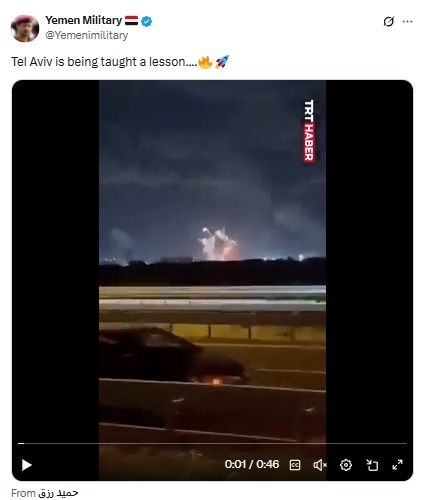
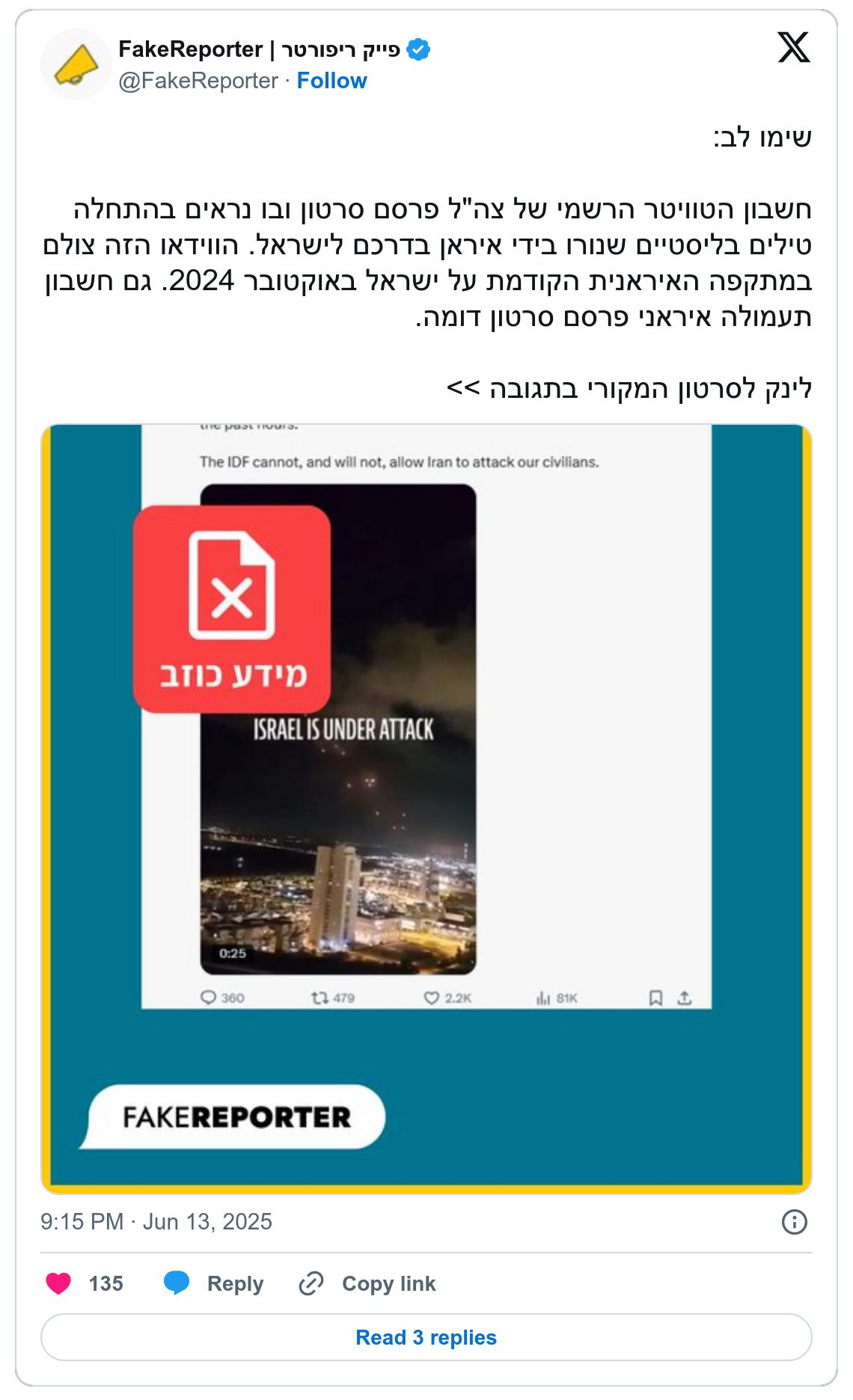
An analysis of the disinformation types included in the examined fact-checks by type indicates that the majority of checked content (76%) was classified as out of date. In these cases, the fact-checks found that the event in question did not occur or was not published on the claimed date. For example, many items that were published during the war actually occurred during the previous conflict between Israel and Iran in 2024.

Image 1. Old clips of Iranian missile attacks on Israel.[5]
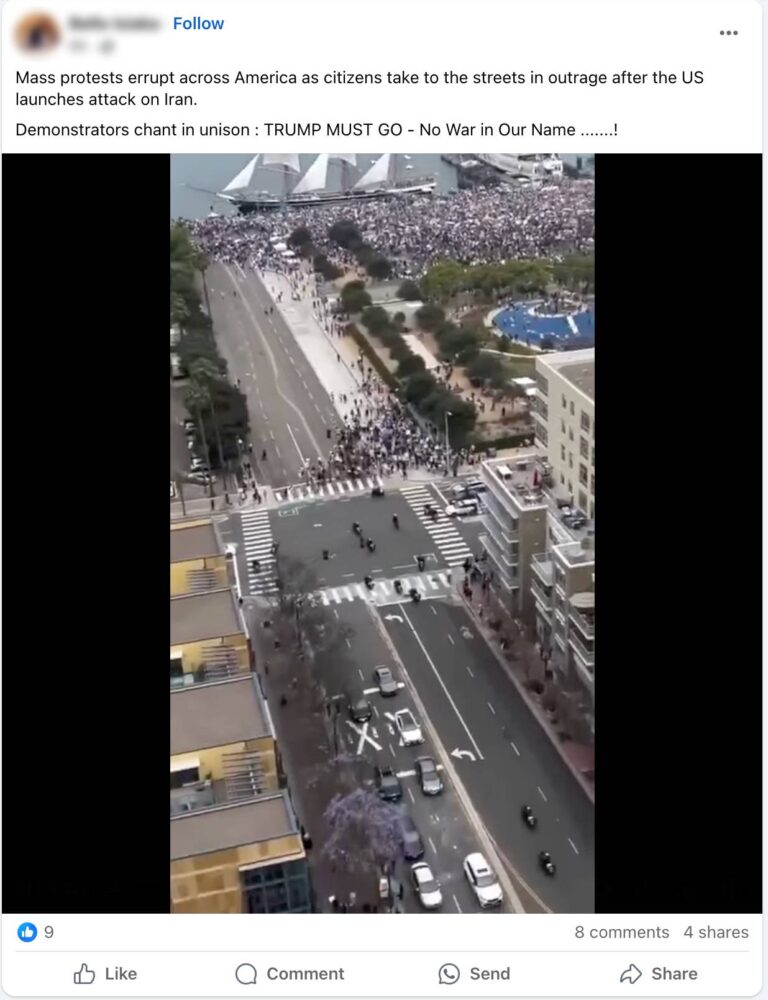
A large proportion of the fact-checks (71%) concerned false connections and decontextualized content. In these items, genuine content is presented with false contextual information, which creates a meaning that differs from or is opposite to the original meaning. For example, one checked item concerned a demonstration in the US that actually occurred during the war at the stated place, but the demonstration was framed with false contextual information: The item claimed that the demonstration was related to the war, although it was actually regarding an entirely different issue.

Image 2. Clip of a demonstration in San Diego against Trump’s No Kings march and government policy, which was presented as documentation of Americans protesting against the US attack in Iran.[6]
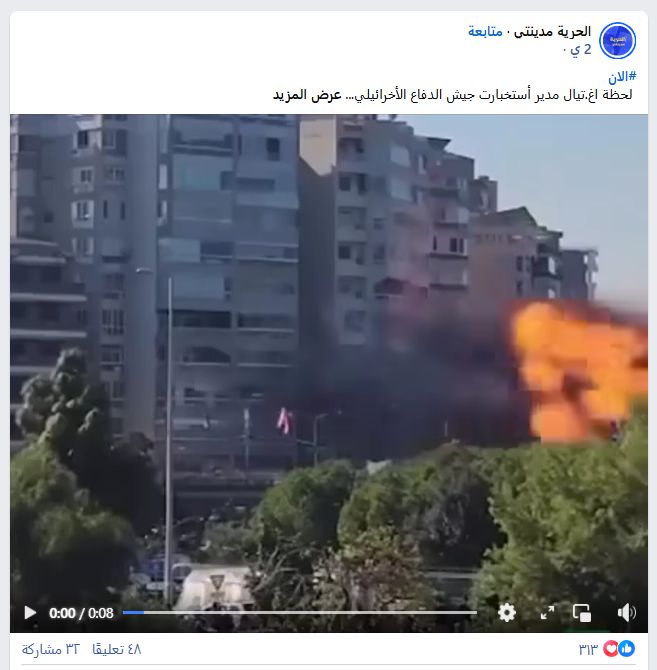
Next, more than one half (63%) of the fact-checked items were presented out of place, that is, the fact-check found that the documented event had occurred in a different location than claimed. For example, claims of Iranian missiles hitting Israel were accompanied by clips or images that had been captured in other locations, including China and Lebanon.
 |
 |
| Image 3. This is not an image of fires caused by the impact of Iranian missiles in Israel, but of a fire that occurred in 2009 in a hotel in China.[7] | Image 4. Clip of Israeli bombing of Lebanon, and not Iranian bombing of a military installation in Israel.[8] |
 |
 |
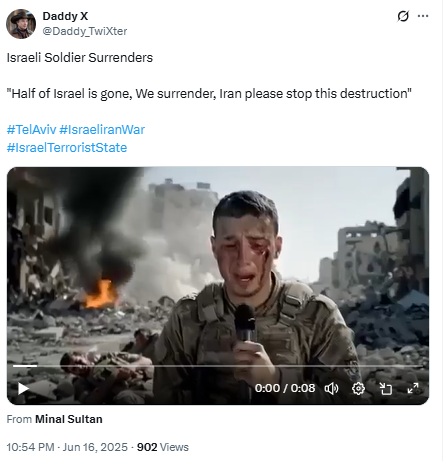
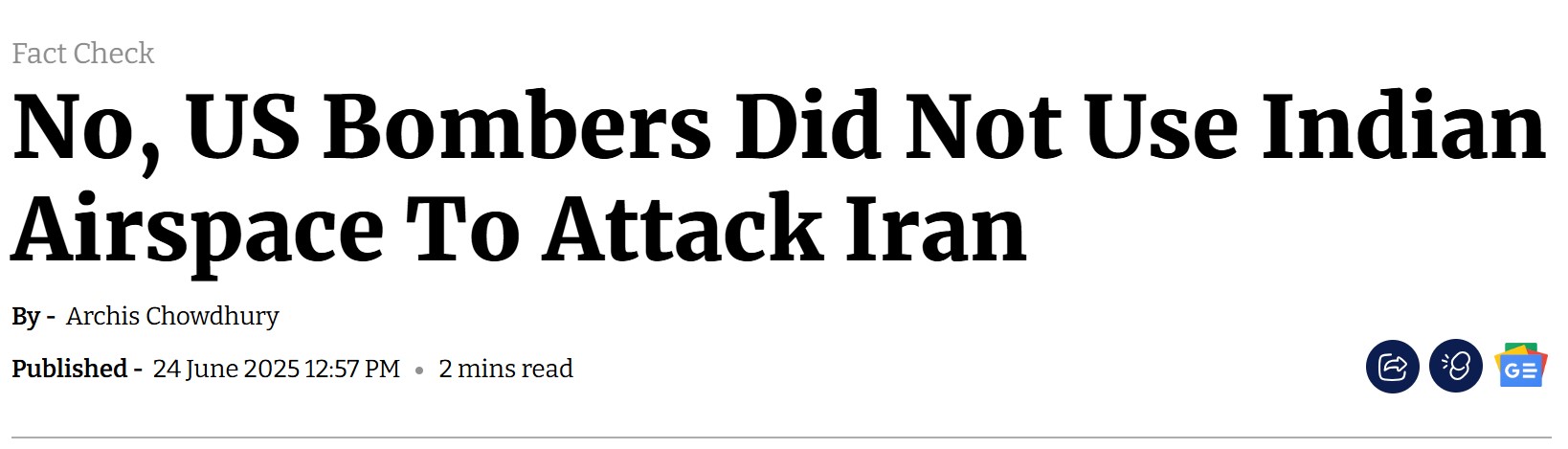
| Image 5. AI-generated clip showing an Israeli soldier surrendering and begging Iran for mercy.[9] | Image 6. Refuting the false claim that the US infiltrated Indian airspace on its route to its attack against Iran.[10] |
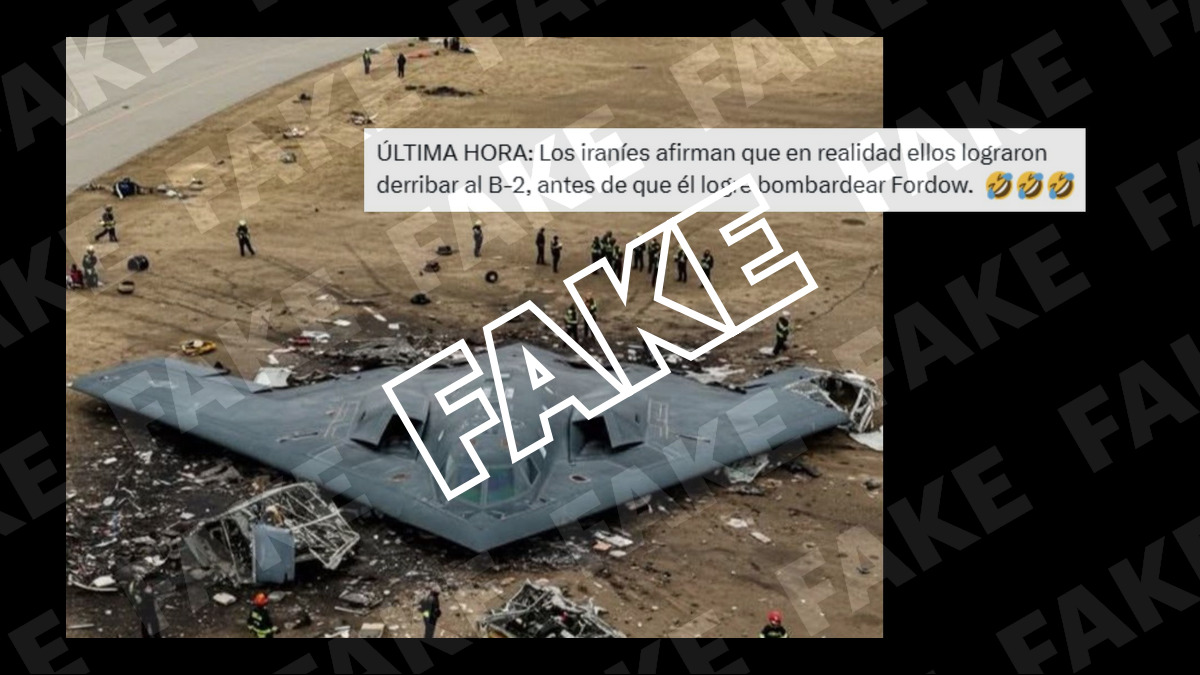
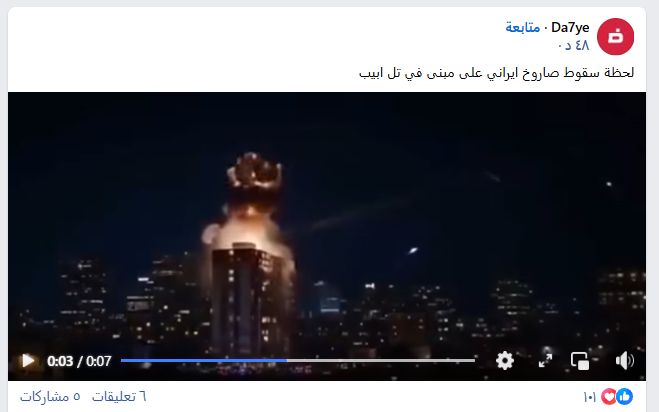
In addition to genuine content taken out of place or date or presented with a false connection, the analysis reveals that 20% of the checked content was generated using Generative AI tools — mainly fabricated clips and images. For example, images and clips showing destroyed buildings and infrastructure in Israel or downing Israeli jets, a clip showing an Israeli soldier surrendering and begging for the end of the war, or clips of Israeli anti-war demonstrations.
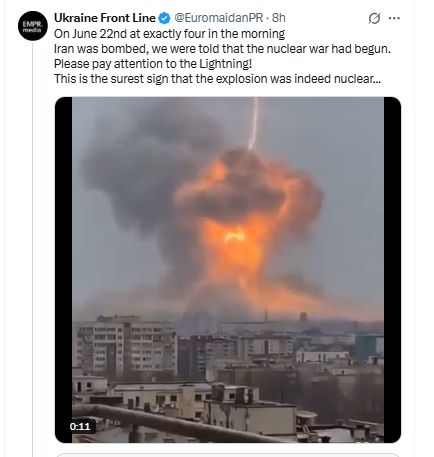
A further 15% of the fact-checked items were identified as fabricated claims — events, actions, or quotes that were entirely fabricated. These fabricated claims included alleged reports of Israeli aircraft crashing in Iran, Israeli pilots captured as prisoners of war, and nuclear attacks (by Israel and by Iran). Indian fact-checking organizations, for example, were extensively engaged in refuting the claim that the US had penetrated India’s airspace on route to an attack against Iran.
 |
 |
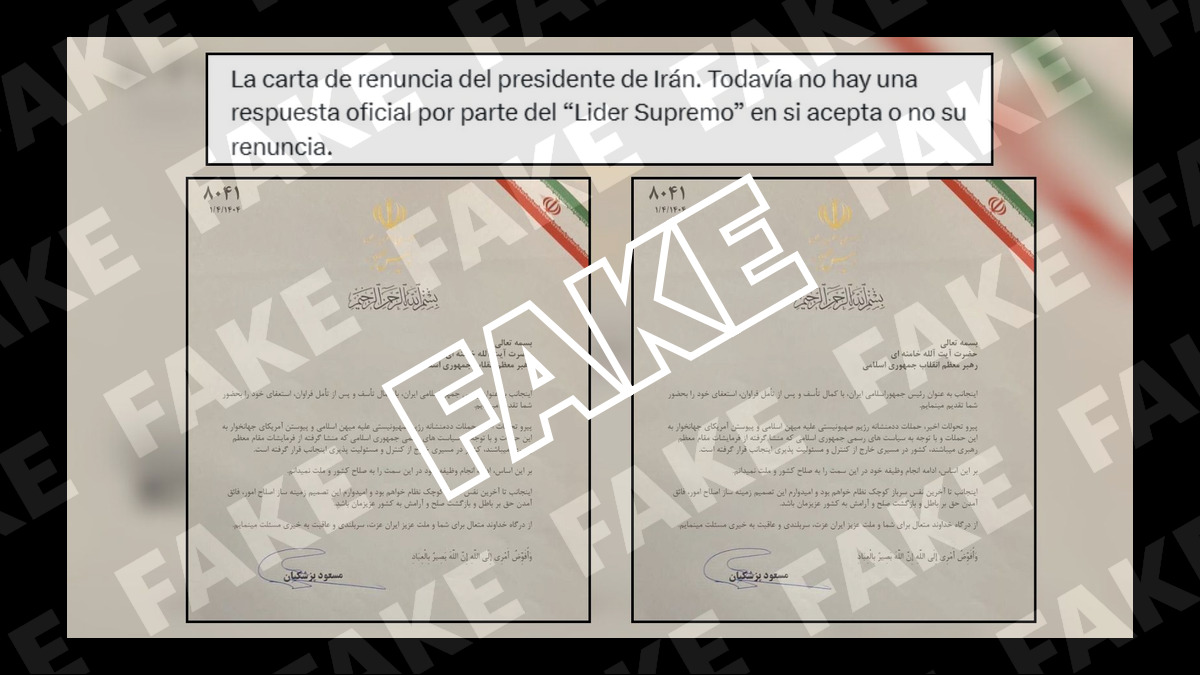
| Image 7. Fabricated item of a nuclear attack against Iran, published on X.[11] | Image 8. Fake letter of resignation of the President of Iran.[12] |
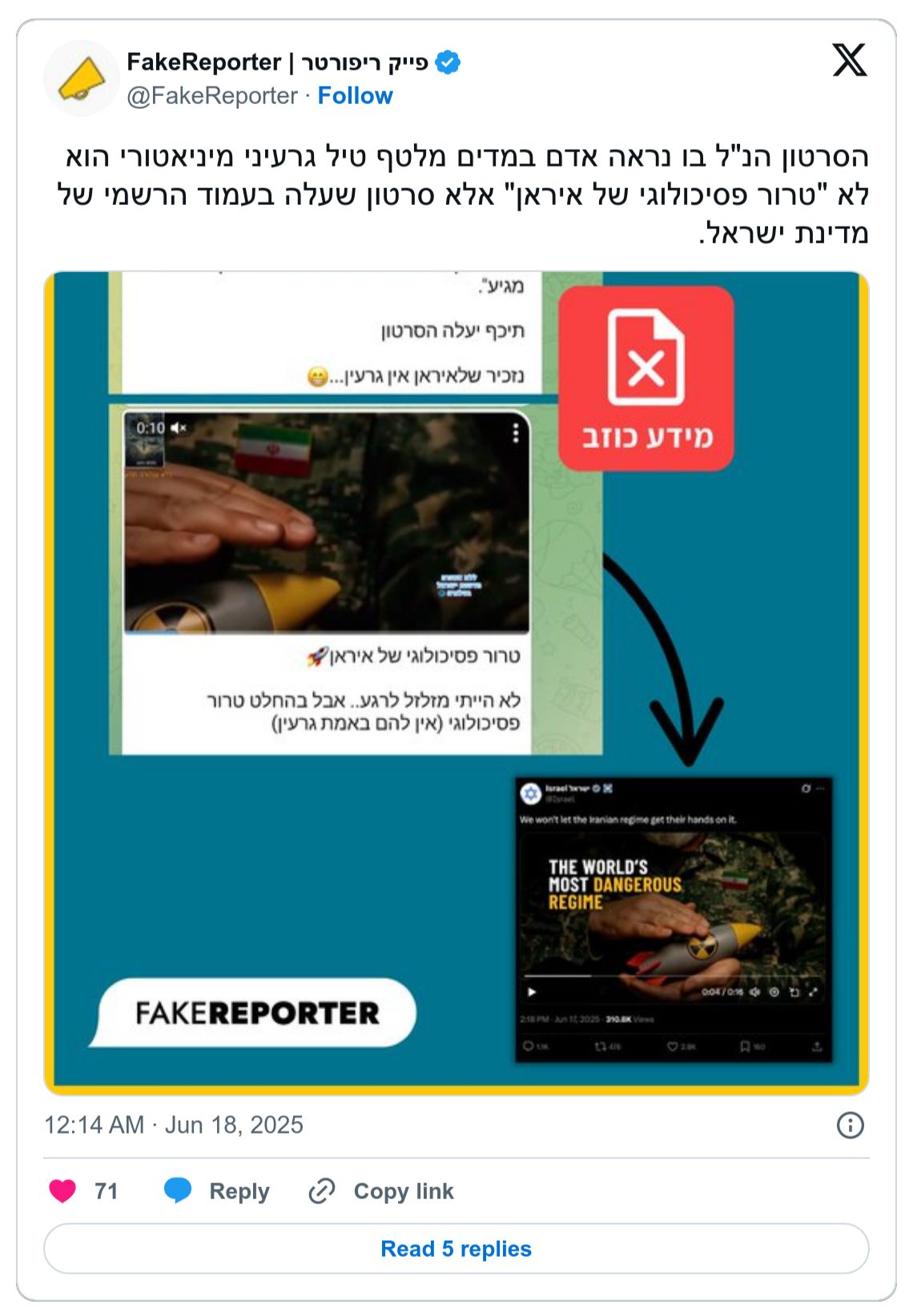
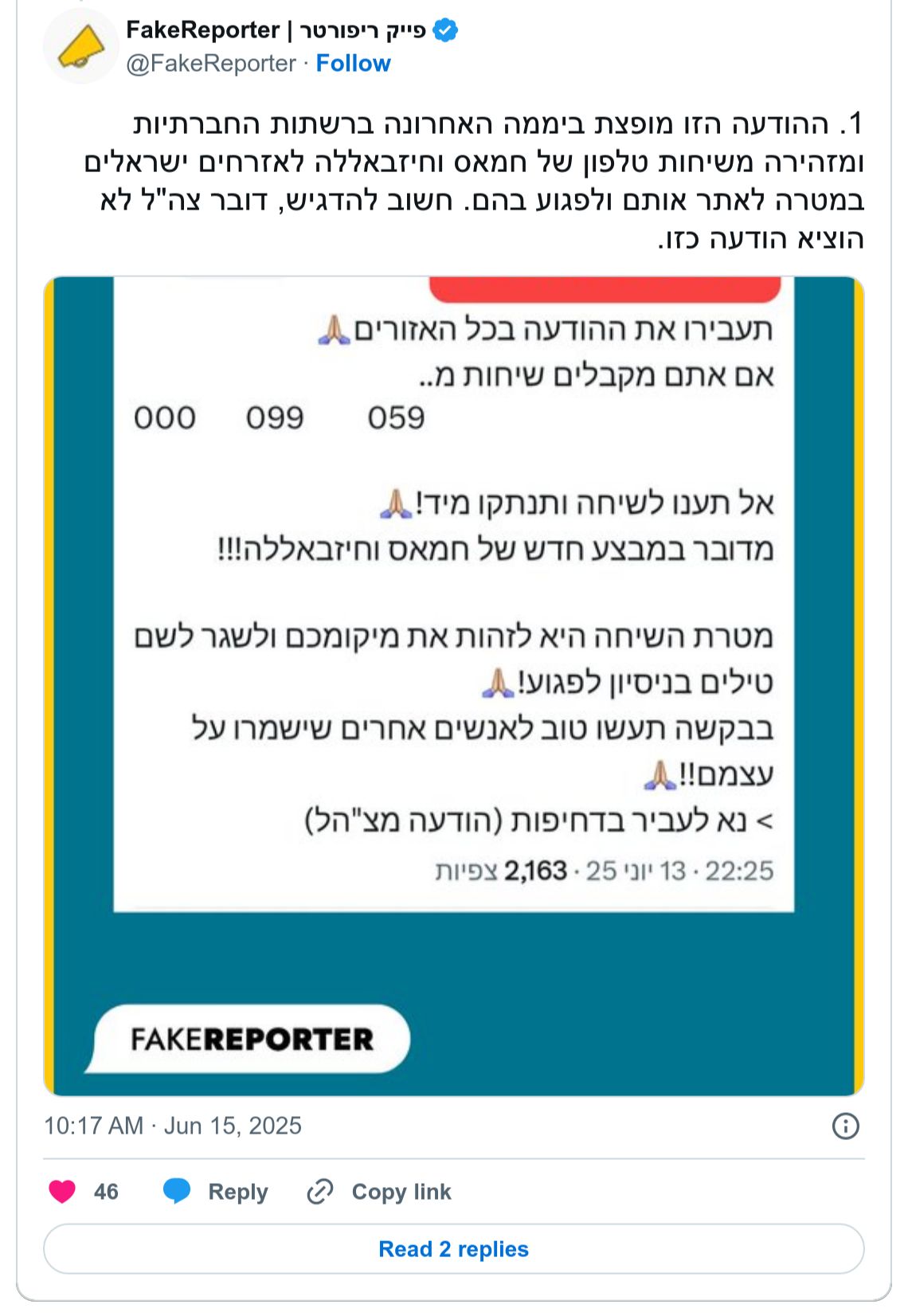
Finally, 2% of the fact-checked content included imposter content — featuring an imposter of some official or qualified entity. The fact-check found that the content was presented by (or attributed to) an imposter or included a fake declaration by an imposter. Examples of imposter content include an alleged report that the President of Iran had resigned, with an image of a fake letter of resignation, or a deepfake clip in which Russian President Putin declares that Russia supports Iran — such a declaration was never made.
In summary, the current analysis shows that the majority of items were decontextualized — taken out of place, out of date, or presented with a false connection and this group is significantly larger than the fact-checks that identified AI-generated fakes and fabricated items. Only a few fact-checks identified manipulated content (not manipulated by AI) or imposter content. That is, the vast majority of deceptive content that was checked did not include pure fabrications but rather was based on genuine events whose facts were embellished or distorted.
It is important to stress that fabricated content and deceptive or manipulated information may involve several types of disinformation or misinformation simultaneously. We therefore examined the overlap between the types of disinformation. As expected, we found a large overlap among the decontextualized content. We also found significant overlap between content taken out of place and AI-generated content, and between fabricated content and decontextualized content.
A breakdown of disinformation formats indicates that the majority of video clips were identified as decontextualized content – taken out of place (68%), out of date (82%), or presented with a false connection (77%), and a minority were AI-generated (17%) or fabricated (12%). Interestingly, AI was used in 41% of the images. The majority of textual content included fabricated claims (56%) and a smaller proportion of imposter content (17%).
Table 3. Distribution of Format by Type of Disinformation
| AI-generated content | Manipulated content | Imposter content | Out of date | Out of place | False connection or false context | Fabricated claims | |
|---|---|---|---|---|---|---|---|
| Text | 6% | 11% | 17% | 6% | 6% | 6% | 56% |
| Video | 17% | 4% | 2% | 82% | 68% | 77% | 12% |
| Image | 41% | 9% | 6% | 47% | 46% | 46% | 32% |
2.3 Main Themes
The coders identified the main themes in each fact-checked item. Coding was performed with the aim of identifying trends, patterns, or recurrent narratives in the disinformation related to the war. After coding of all fact-checks was completed, eight main themes emerged: physical damage (mainly to building and infrastructure), explosions, displays of military power, civil panic, public protests, political issues, aircraft crashes or interceptions, and assassinations of senior officials or spies.[13]

Figure 4. Main themes identified in the fact-checked disinformation content.
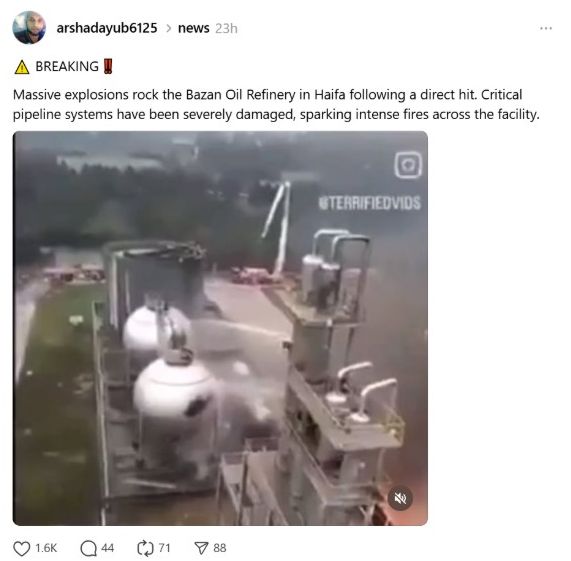
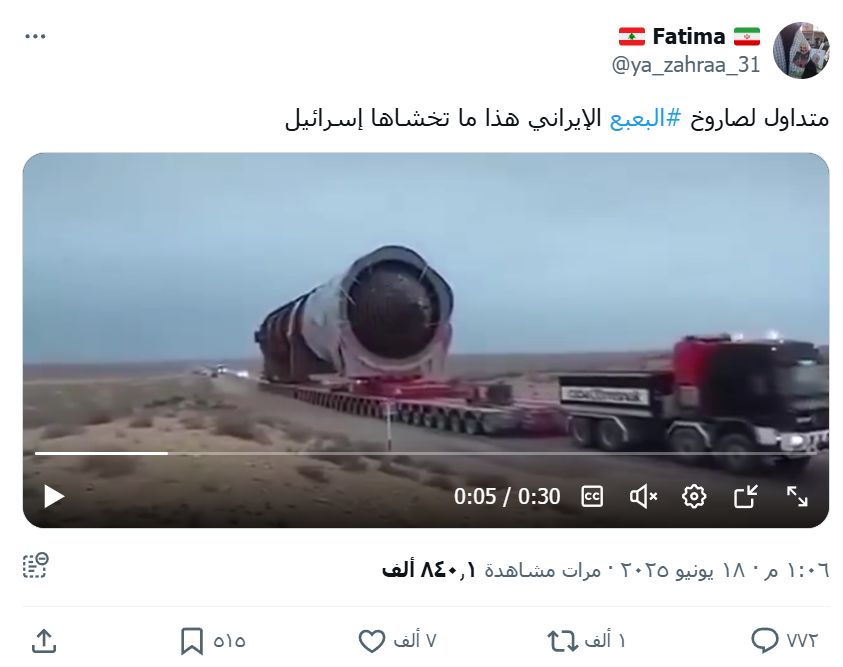
The most prevalent theme in the fact-checked content was physical damage to buildings or infrastructure (this theme appeared in 44% of the fact-checks). Such false content included, for example, alleged destruction to Azrieli Towers in Tel Aviv by Iranian missiles or to an airport in Teheran caused by Israeli attacks. Disinformation of this type was designed to falsely exaggerate the scope of destruction caused in the war. A second prevalent theme concerned explosions in various sites (39%). These items, which included images and video clips of fire, smoke, and explosions at the moment of impact, supposedly caused by one of the combatants, were frequently decontextualized. One example is a series of false reports of attacks on the nuclear site at Fordow or an explosion in Haifa Bay. The content associated with this theme was disseminated to arouse fear and uncertainty regarding the occurrence of explosions or attacks, and to create a sense of chaos during the war. Another theme, which appeared less frequently, concerned displays of military force (15%). These items were designed to cause panic and deterrence, and included, for example, a presentation of a stock of Israeli bombs or trucks loaded with missiles on route to be launched against Israel.
 |
 |
| Image 9. Video clip showing an alleged Iranian attack on the oil refinery in Haifa, but the source of this image is a fire-fighting drill conducted in 2015 in China.[14] | Image 10. Old clip allegedly showing a US attack on Iran.[15] |
 |
 |
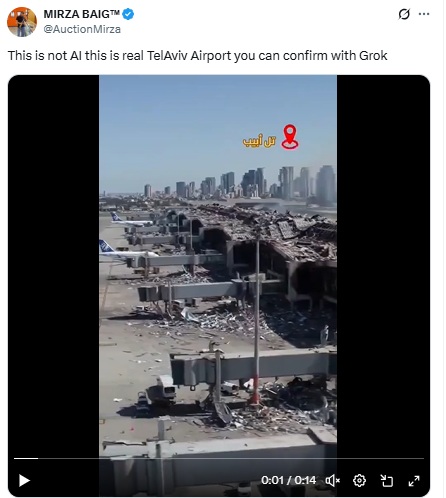
| Image 11. Viral AI-generated video clip allegedly showing damaged caused in Ben Gurion airport by an Iranian attack.[16] | Image 12. Video allegedly showing an enormous Iranian missile on route to its launching pad against Israel. This clip was posted online in 2018 and shows an industrial silo for a GLP factory on route from Kazakhstan to Uzbekistan.[17] |
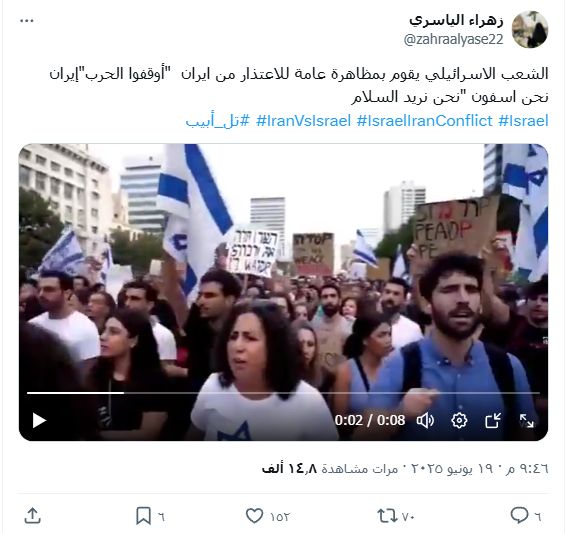
An additional theme focused on civil panic during the war (14%) and was reflected in images and clips of masses of people fleeing from city centers in response to enemy attacks, and civilian protests in support of or against the local government (10%). The protest theme mainly included images of anti-government protest demonstrations in Iran and demonstrations in support of Israel’s attacks, as well as images of demonstrations supporting the government and expressing joy at the attacks against Israel. Although most of these items were posted as events that occurred in Iran, some images allegedly originated in Israel, for example, images of Israeli citizens imploring Iran to stop the war.
 |
 |
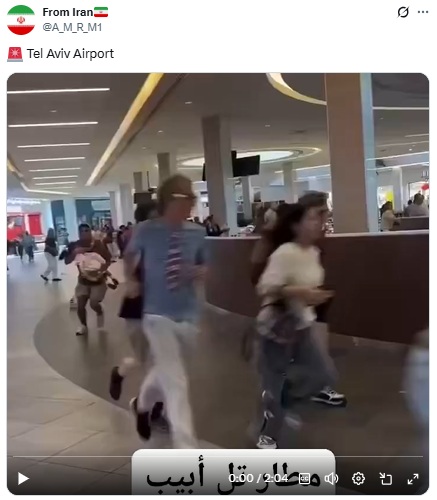
| Image 13. AI-generated clip of an alleged Israeli demonstration of Israelis apologizing to Iran and demanding that the war end.[18] | Image 14. An old clip from a terrorist attack in a mall in Florida, presented as documentation of chaos in Ben Gurion Airport.[19] |
 |
 |
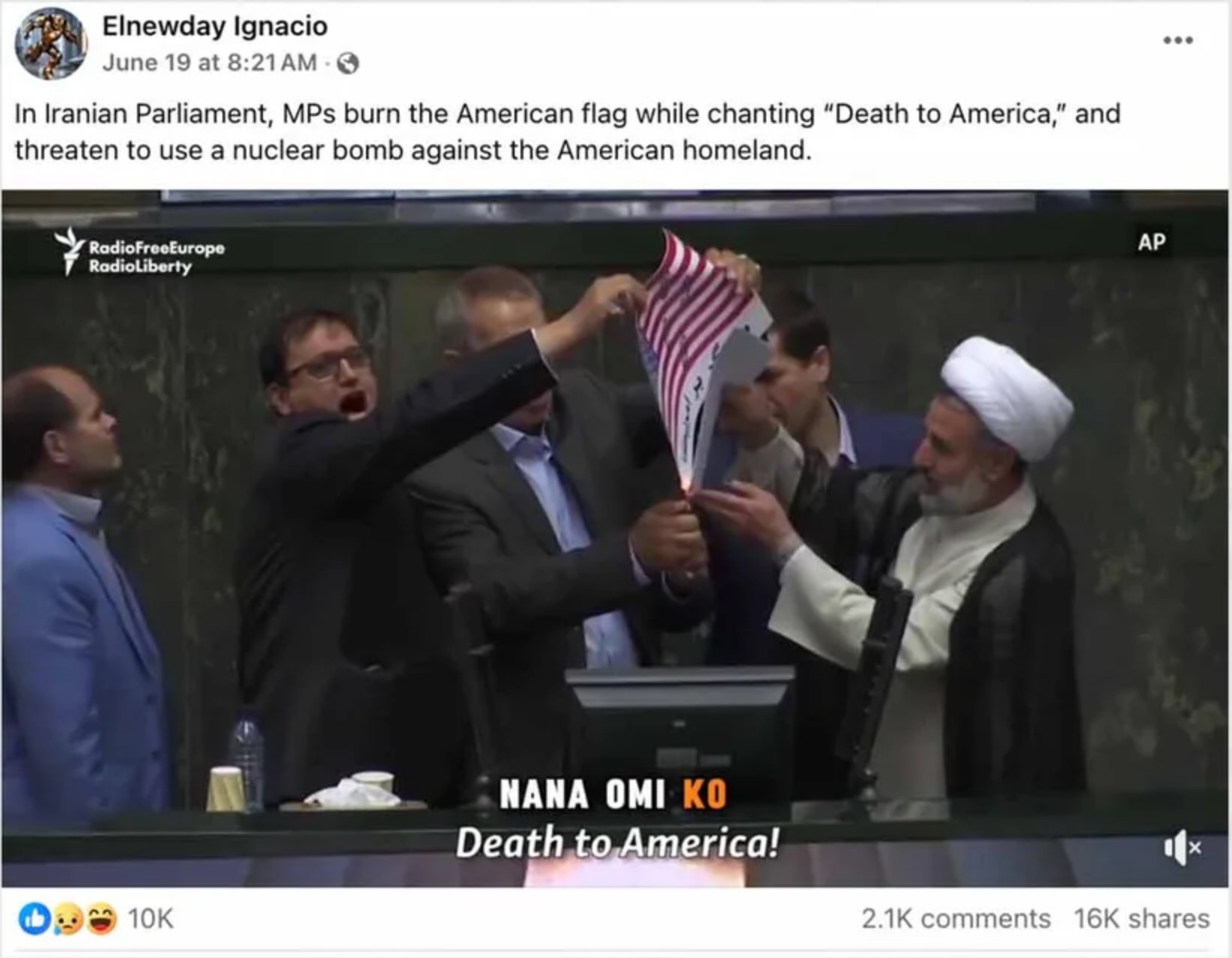
| Image 15. Video clip from 2018 showing Iranian members of parliament burning an American flag.[20] | Image 16. AI-generated image created to claim that Iran downed F-35 Israeli jets in Iranian skies.[21] |
 |
|
| Image 17. AI-generated image alleging that a US B-2 bomber was intercepted on route to attack the nuclear site at Fordow.[22] |
Another theme is political issues (9%). Content reflecting this theme included politicians’ threats and warnings, such as President Trump’s call the Netanyahu to stop the attacks on Iran. Examples include a video clip allegedly showing Trump announcing that the US should not become involved in the war and an old clip of Iranian parliament members burning a US flag. Another repeated theme focused on aircraft crashes or pilots in captivity (7%). This theme was frequently associated with the claim that Iran managed to cause damage to Israel’s air force, but the majority of the visual items that accompanied these claims were AI-generated. Finally, a marginal theme (1%) involved assassinations, including false claims that Netanyahu was killed in an Iranian assassination, or that Mossad agents assassinated senior Iranian officials (unrelated to the confirmed assassination attempts published in the press).
These findings indicate that the majority of the false content distributed with respect to the war focused on physical damage to civilian and military infrastructure and combatants’ displays of military force. Another interesting aspect of the various themes is related to efforts to influence public opinion by showing the combatants’ support for or opposition to the war, which is reflected in the images that focus on protests and civil panic.
2.4 Motivation for Creating and Distributing Disinformation
We made an effort to gain an understanding of the motivation for creating and disseminating disinformation during the war, although we were aware of the challenge of reaching a clear-cut determination of these motives. For each fact-checked content, we asked which party might gain from its dissemination, and coded the answer. An analysis of motives indicates that in 72% of the cases, the spread of disinformation could have served the Iranian side more, compared to 24% of the false content that could have mainly served the Israel side. In 4% of the cases, it was not possible to attribute a clear motivation to either party.

Figure 5. Fact-Checked Content by Favored Country
-
Comparative Analysis of Decontextualized and AI-Generated Disinformation
In this section, we expand the discussion on two main types of disinformation that were the most frequently employed according to our analysis: content that decontextualized genuine content, and synthetic content created by AI.
3.1 Disinformation that Includes Decontextualized Information
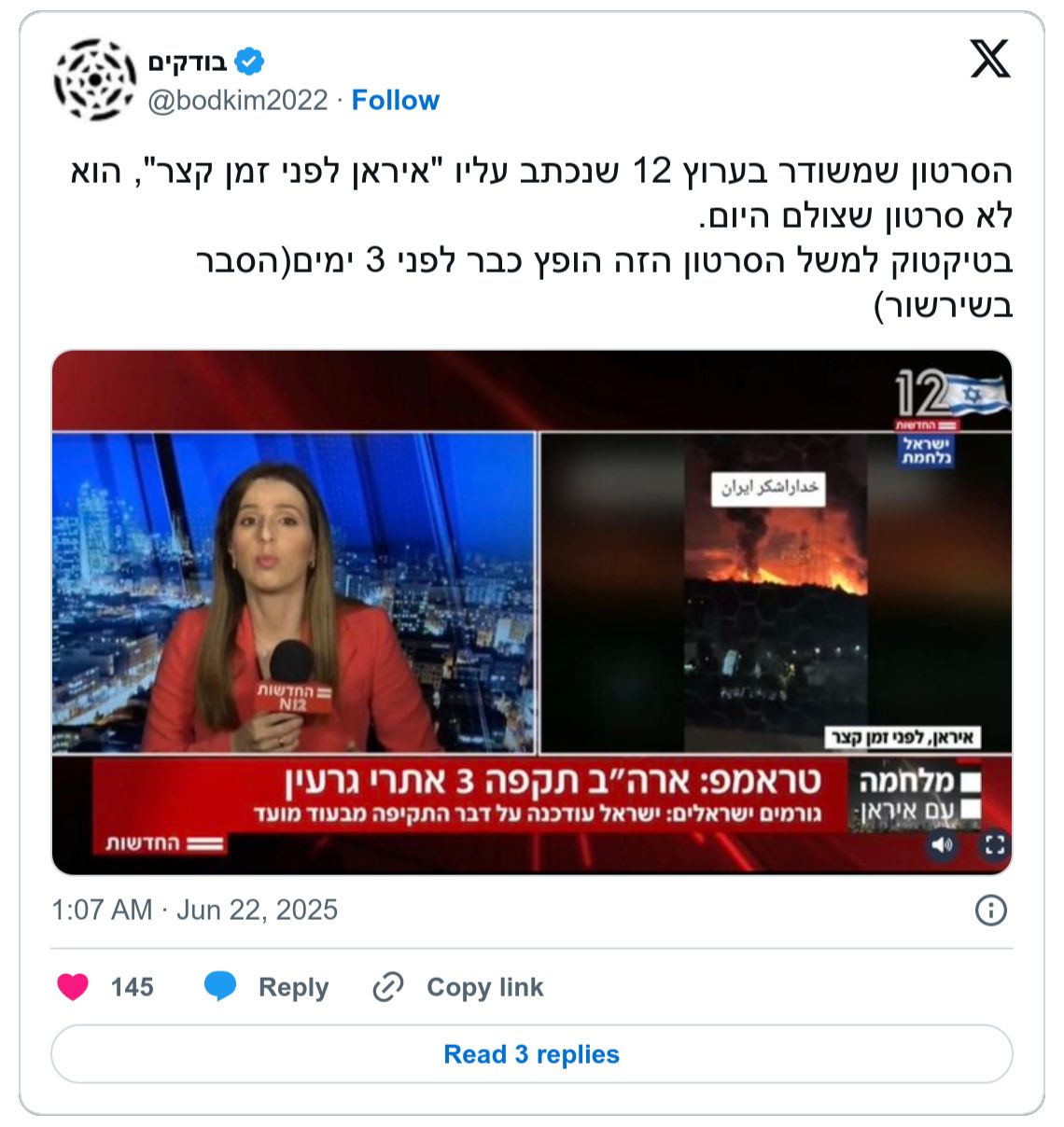
The analysis shows that in the majority of cases, genuine documentation was taken out of context. Sometimes the genuine content was taken out of context on several levels, including attribution to a different time or location (for example, using a video clip from the beginning of the Russia-Ukraine War). In effect, content that was out of place and out of date accounts for close to one-half (48%) of all fact-checked items included in the study. Therefore, out of place, out of date, or false connection items should be considered various expressions of the same phenomenon, or part of a general tactic to decontextualize information with the intention of deception. The analysis shows that 88% (470) of the fact-checks of war-related content contained at least one decontextualized feature. The current section focuses on all the fact-checks that identified at least one decontextualized element.[23]
Due to the high percentage of decontextualized items, it is not surprising that the main themes in this category are consistent with the main categories identified in the general analysis. An examination of the main themes indicates that decontextualization typically involved content related to physical damage (49%), explosions (43%), civil panic and displays of military force (14% each), protests (11%), and aircraft crashes and political issues (5%). Only two fact-checks involved content related to assassinations. That is, in the majority of cases, decontextualization served to create deceptions about the physical destruction of buildings and infrastructure and explosions.
For out of place items (362 fact-checks), which presented events from other places around the world as if they had occurred in the Israel–Iran War, we coded the alleged place of occurrence and the actual place of occurrence, if the fact-check contained this information. Table 5 lists the 15 main places of occurrence of the events that are claimed to have occurred in the Israel–Iran War.[24] It is interesting to note that out of place content sometimes involved documentation from a place in Israel or Iran but the site was not the alleged site of event. For example, an image of an explosion that occurred in Tel Aviv was claimed to be documentation of an explosion in the oil refineries in Haifa, or an explosion in the nuclear site Bushehr was claimed to be an explosion in a civil port in southern Iran.
| Actual place of occurrence | Frequency | Alleged location is in Israel (n = 221) | Alleged location is in Iran (n = 131) |
|---|---|---|---|
| China | 41 | 41 | 0 |
| Israel | 27 | 6 | 17 |
| US | 24 | 20 | 6 |
| Russia | 17 | 8 | 9 |
| Syria | 17 | 1 | 14 |
| Iran | 16 | 5 | 8 |
| Computer game | 14 | 0 | 14 |
| Ukraine | 13 | 12 | 0 |
| Iraq | 13 | 12 | 1 |
| Lebanon | 12 | 10 | 2 |
| Chile | 9 | 0 | 9 |
| Uzbekistan | 8 | 0 | 8 |
| Mexico | 7 | 3 | 4 |
| Georgia | 7 | 7 | 0 |
| Gaza | 6 | 6 | 0 |
Table 5. Actual and Alleged Locations of Out of Place Disinformation
In summary, the analysis of the real locations of the out of place content shows that the most popular source of documentation used in war-related disinformation is China (41 fact-checks), mainly involving explosions and physical damage to buildings and infrastructure. The second most frequently used country is Israel (27 fact-checks), which served mainly as a source of video clips of past attacks that allegedly occurred in the Israel–Iran War, or of damage in one location that allegedly occurred in another location. Finally, video clips and images taken in the US (24) served multiple themes, including protests and civil panic.
3.2 AI-Generated Disinformation
During the war, the international media reported the widespread use of AI tools to create and disseminate disinformation on the events of the war.[25] We therefore sought to examine whether this practice was popular and the role that AI-generated fake war-related content played compared to more traditional and familiar forms of manipulating visual content.
This section of the report analyzes content that included AI use and was fact-checked during the war — a total of 105 fact-checks, which constitute 20% of the fact-checks included in the current study. First, we wished to examine the distribution of the content formats that contained AI-generated disinformation. That is, which media formats used AI-generated content to spread disinformation during the war. The analysis indicates that video clips constituted the vast majority of AI-generated war-related content (73%) and images accounted for the remainder (27%). It is interesting to note that video and images (68% and 24% respectively) were also the main formats in disinformation that contained manipulated content that was not AI-generated (approximately 25 publications). These findings are consistent with the overall trend that shows that the vast majority of war-related fact-checked disinformation content used a video format. However, disinformation content, whether AI-generated or not, contained a larger percentage of images compared to the entire sample (in which images comprised only 13% of the fact-checked content).

Figure 6. Fact-Checked AI-Generated Disinformation Content by Format
A breakdown of the themes identified in AI-generated content indicates that AI was mainly used to create images of physical damage (56%) and explosions (27%), and was used less to generate images related to civil panic (13%), downed aircraft (11%), displays of military force (10%), protests (7%), political issues (4%), and assassinations (2%). This breakdown is similar to the general distribution of themes in the fact-checked items included in the current study, although the theme of physical damage is more prevalent in AI-generated content than in decontextualized content, at the expense of the theme of explosions: 56% of AI-generated content show alleged physical damage compared to 49% of decontextualized content, whereas content describing explosions account for only 27% of AI-generated content compared to 43% of decontextualized content.

Figure 7. Main Themes of AI-Generated War-Related Disinformation
Furthermore, according to an analysis of the AI-generated fact-checked disinformation that mentioned specific sites, 81% of these items purported to present events in Israel, such as explosions in buildings, compared to only 17% of such items that purported to present events in Iran, such as pro-Israel demonstrations of Iranian citizens or images of missiles before launch.

Image 18. AI-generated video clip allegedly showing the collapse of buildings in Israel caused by Iranian missile fire.[26]
Accordingly, an examination of the motivation for creating and disseminating AI-generated war-related content shows that in 90% of the cases, the dissemination of AI-generated content potentially serves the Iranian side, and in only 10% of the cases might serve Israeli interests. This discrepancy is even larger than the difference in motivation that emerges from an analysis of motivation based on the entire sample, and shows that the majority of AI-generated war-related materials mainly served Iran and its interests.

Figure 8. Motivation for Disseminating Fake AI-Generated Content
We also examined how fact-checking organizations manage to identify and prove fake AI-generated content. A qualitative manual analysis shows that the organizations typically use tools to identify AI-generated content, such as Undetectable AI, Hive Moderation, SightEngine, and WasItAll? The organizations also identify the source of the watermarks that appear on images or clips, which overtly mark the name of the tool used to generate the content. Other methods include identifying the source that disseminated the fabricated content based on the source’s own declaration that it was AI-generated or identifying details that should not reasonably appear in genuine content, such as errors in spelling, landscapes, or depiction of body parts.
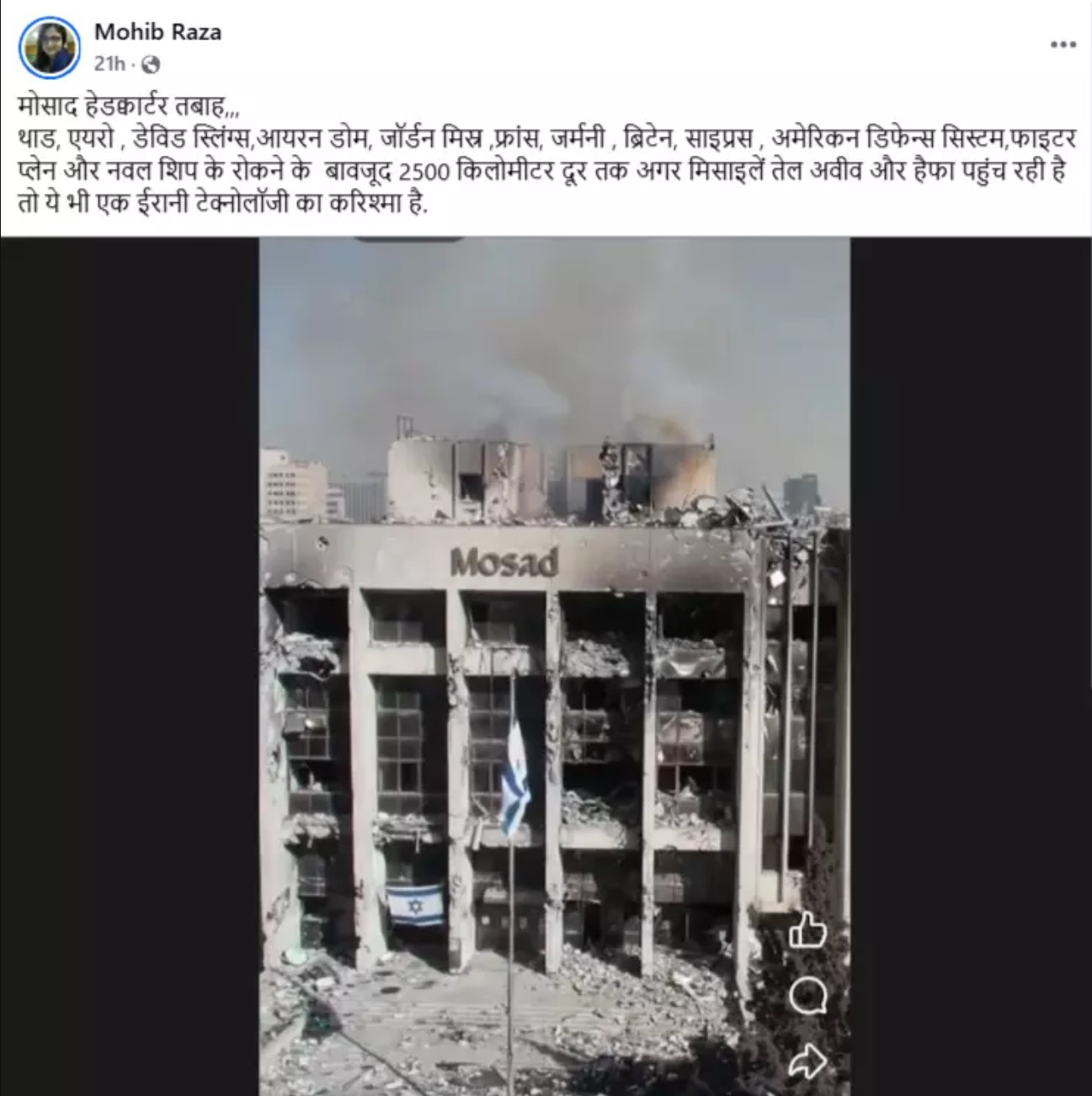
It is also interesting to note that the majority of the cases in which AI tools were used to generate war-related disinformation included new content (73%), while 27% contained recycled AI-generated disinformation that had been disseminated before the war. This finding emerged from a breakdown of fact-checks that identified content that was originally created using AI, disseminated in the past, and re-disseminated during the Israel–Iran War. The analysis did, however, find that the majority of the content created before the war was created several months or weeks prior to the beginning of the war, and its context was not entirely unrelated to the war.

Image 19. Images created using AI that allegedly show destruction in the Mossad headquarters. This image was already posted in May 2025, before the war began.[27]
Gallery




References
[1] The two Israeli fact-checking organizations (FakeReporter and Bodkim, with 38 and 20 fact-checks, respectively) were not included in this chapter on analysis due to their different source (see Methodology section). See Appendix B for a complete list of the organizations included in the current study.
[2] Since AFP is an agency that contains several fact-checking organizations, we classified all the fact-checks performed by AFP offices around the world under AFP (see Appendix B).
[3] Hameleers, 2025; EU DisinfoLab Research Team, 2022; Wardle & Derakhshan, 2017.
[4] A single fact-check may refer to several types of disinformation. See Appendix A for the criteria for coding each type.
[5] Mahalanobish, A. (2025, June 18). More old videos of missile strikes viral as Iran’s June attack on Israel. Alt News. https://www.altnews.in/more-old-videos-of-missile-strikes-viral-as-irans-june-attack-on-israel/
[6] Appani, A. K. (2025, June). A video of San Diego’s “No Kings” march is being shared as footage of Americans protesting against the US attack on Iran. Factly. https://factly.in/a-video-of-san-diegos-no-kings-march-is-being-shared-as-footage-of-americans-protesting-against-the-us-attack-on-iran/
[7] Arabic News Health Investigation Service (2025, June 25). هذه الصورة ليست لحريق في إسرائيل نتيجة الصواريخ الإيرانية بل لحريق في فندق في الصين عام 2009 [This picture is not of a fire in Israel as a result of Iranian missiles, but of a fire in a hotel in China in 2009]. AFP. https://factcheckarabic.afp.com/doc.afp.com.62ZH7KD
[8] Misbar Editorial Team [فريق تحرير مسبار] (2025, June 16). فيديو قديم من لبنان وليس لقصف إيراني على مبنى للمخابرات الإسرائيلية [An old video from Lebanon, not of an Iranian strike on an Israeli intelligence building]. https://www.misbar.com/factcheck/2025/06/16//فيديو–قديم–من–لبنان–وليس–لقصف–إيراني–على–مبنى–للمخابرات–الإسرائيلية
[9] Madhusoodan, K. (2025, June 20). Viral video claiming to show Israeli soldier begging Iran for mercy is AI-generated. Newschecker. https://www.newschecker.in/undefined/ai-deepfake/viral-video-claiming-to-show-israeli-soldier-begging-iran-for-mercy-is-a-deepfake
[10] Chowdhury, A. (2025, June 24). No, US bombers did not use Indian airspace to attack Iran. BOOM. https://www.boomlive.in/fact-check/us-airstrikes-iran-indian-airspace-claim-fact-check-28864
[11] Duke, A. (2025, June 22). Fact-check: Video does NOT show lightning bolt during US bombing of Iran nuclear facility. Lead Stories. https://leadstories.com/hoax-alert/2025/06/fact-check-video-does-not-show-lightning-bolt-during-us-bombing-of-iran-nuclear-facility.html
[12] Pérez, S. (2025, June 23). El presidente de Irán no ha presentado su dimisión a 23 de junio de 2025, la carta viral es falsa [The president of Iran has not submitted his resignation as of June 23, 2025; the viral letter is fake]. Newtral. https://www.newtral.es/carta-renuncia-presidente-iran/20250623/
[13] Multiple themes could be identified in each fact-check. Therefore, the count of the themes exceeds the total number of fact-checks included in the current study.
[14] Moubayed, E. (2025, June 18). Video does not show Iranian attack on Bazan oil refinery in Haifa. Misbar. https://www.misbar.com/en/factcheck/2025/06/18/video-does-not-show-iranian-attack-bazan-oil-refinery-haifa
[15] Sodipe, L. (2025, June 26). مقاطع فيديو قديمة لانفجارات تُصوَّر زائفًا على أنها ضربات أمريكية على إيران [Old blast videos falsely depicted as US strikes on Iran]. AFP. https://factcheck.afp.com/doc.afp.com.63DM9KF
[16] Madhusoodan, K. (2025, June 18). Viral video claiming to show Tel Aviv Airport in ruins after Iran strike found to be AI-generated. Newschecker. https://newschecker.in/ai-deepfake/viral-video-claiming-to-show-tel-aviv-airport-in-ruins-after-iran-strike-found-to-be-ai-generated
[17] Ibrahim, N. (2025, June 19). الفيديو من عام 2018 وليس لعملية نقل صاروخ إيراني ضخم [Video is from 2018 and not depicting the transfer of a massive Iranian missile]. Misbar. https://www.misbar.com/factcheck/2025/06/19/الفيديو–من–عام-2018-وليس–لعملية–نقل–صاروخ–إيراني–ضخم
[18] Misbar Editorial Team [فريق تحرير مسبار] (2025, June 20). الفيديو ذكاء اصطناعي وليس لإسرائيليين يعتذرون لإيران ويطلبون وقف الحرب [The video is AI-generated, not of Israelis apologizing to Iran and calling for a ceasefire]. Misbar.
https://www.misbar.com/factcheck/2025/06/20/الفيديو–ذكاء–اصطناعي–وليس–لإسرائيليين–يعتذرون–لإيران–ويطلبون–وقف–الحرب
[19] Madhusoodan, K. (2025, June 19). Old video of stampede at Florida Mall shared as chaos at Tel Aviv airport. Newschecker. https://newschecker.in/fact-check/old-video-of-stampede-at-florida-mall-shared-as-chaos-at-tel-aviv-airport
[20] Rappler (2025, June 19). Fact-check: Video of Iran lawmakers burning U.S. flag inside parliament is from 2018. https://www.rappler.com/newsbreak/fact-check/video-iran-lawmakers-burning-us-flag-2018-not-recent/
[21] Jo, H. (2025, June 26). AI image of crashed jet falsely linked to Iran-Israel war. AFP. https://factcheck.afp.com/doc.afp.com.62Y23WD
[22] Castroviejo, M. (2025, June 23). Esta imagen de un bombardero estadounidense B-2 supuestamente derribado por Irán está generada con IA [This image of a US B-2 bomber allegedly downed by Iran is AI-generated]. Newtral. https://www.newtral.es/b-2-derribado-iran-bulo/20250623/
[23] This section includes contents that were found to be out of place but were not coded as AI-generated. See further in this section for AI-generated out of place contents.
[24] This analysis also includes checks of contextomized contents performed by the Israeli fact-checking organizations, which were analyzed separately (Bodkim and FakeReporter). In several cases, disinformation content was disseminated accompanied by different claims, as an event that occurred in Israel or as one that occurred in Iran. In some cases, content was taken out of context and did not occur either in Israel or in Iran. Therefore, the number of real locations may be different than the sum of claims concerning events that occurred in Israel and in Iran.
[25] EDMO, 2025; Murphy et al., 2025.
[26] Misbar Editorial Team [فريق تحرير مسبار] (2025, June 15). مشاهد زائفة وليست لسقوط مبان في إسرائيل نتيجة القصف الإيراني [Fake footage of buildings collapsing in Israel as a result of Iranian bombing]. Misbar. https://www.misbar.com/factcheck/2025/06/15/مشاهد–زائفة–وليست–لسقوط–مبان–في–إسرائيل–نتيجة–القصف–الإيراني
[27] Bhardwaj, S. (2025, June 20). इजरायल में मोसाद हेडक्वार्टर की तबाही के दावे से AI generated विजुअल वायरल [AI generated visuals go viral with claims of destruction of Mossad headquarters in Israel]. BOOM. https://hindi.boomlive.in/fact-check/iran-israel-conflict-ai-generated-visuals-of-mossad-headquarters-viral-28831